
Lifeline Australia x Balarinji
A Palawa artwork for Lifeline Australia’s Reconciliation Action Plan, developed with Balarinji and extended into the organisation’s workplace.
ARTIST ● DIGITAL ILLUSTRATION & COLLABORATION ● SYDNEY, AUSTRALIA - NATIONAL ● 2025
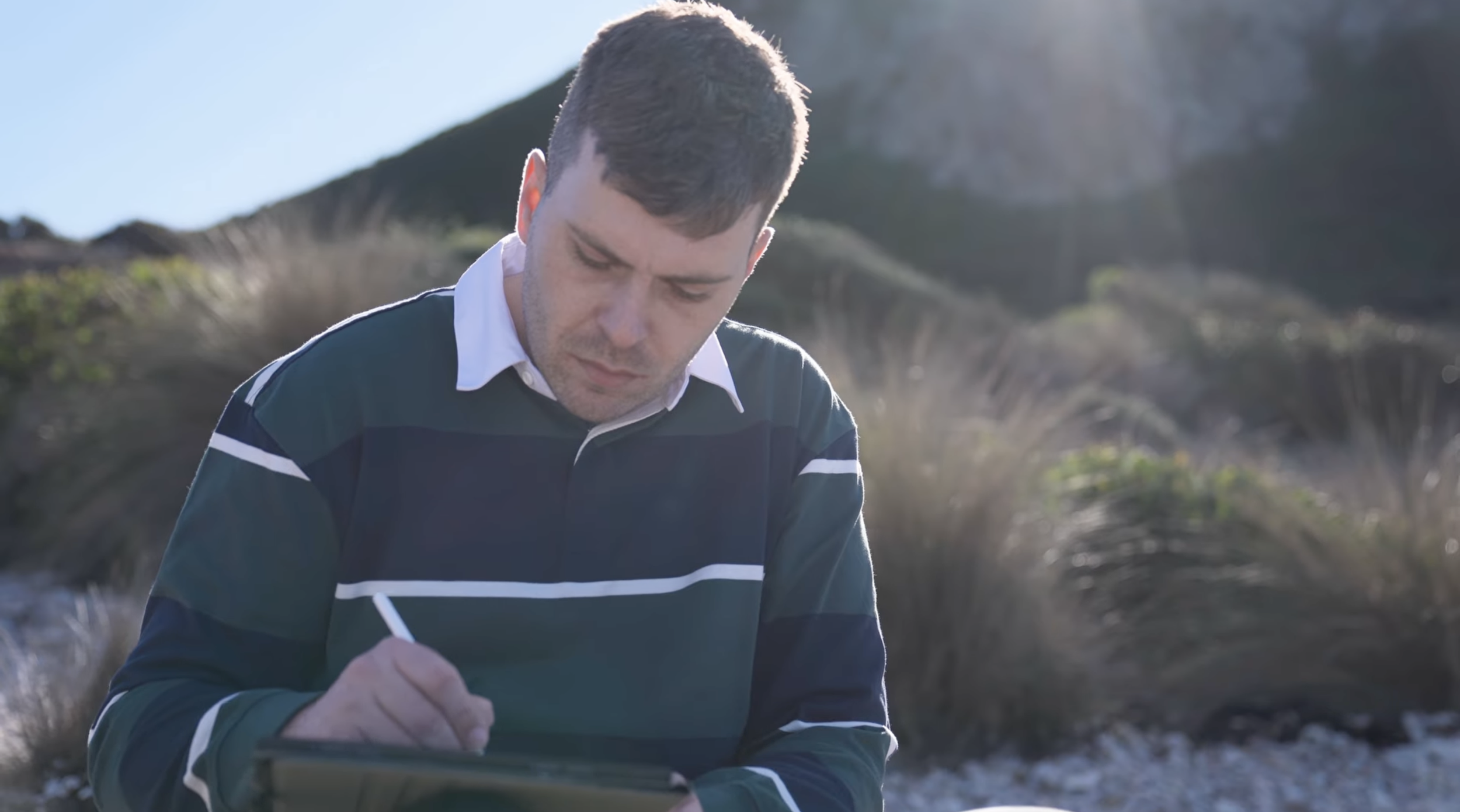
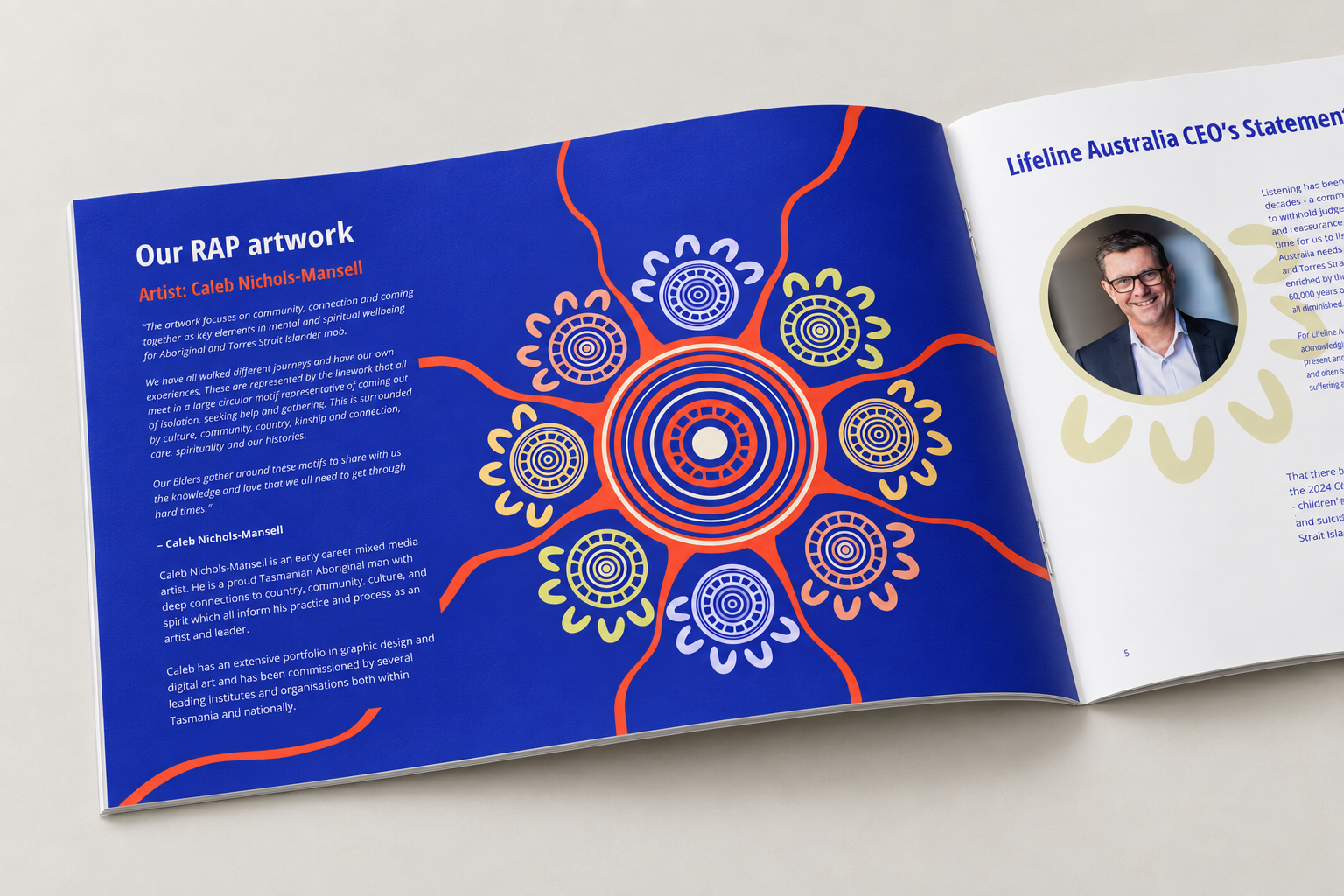
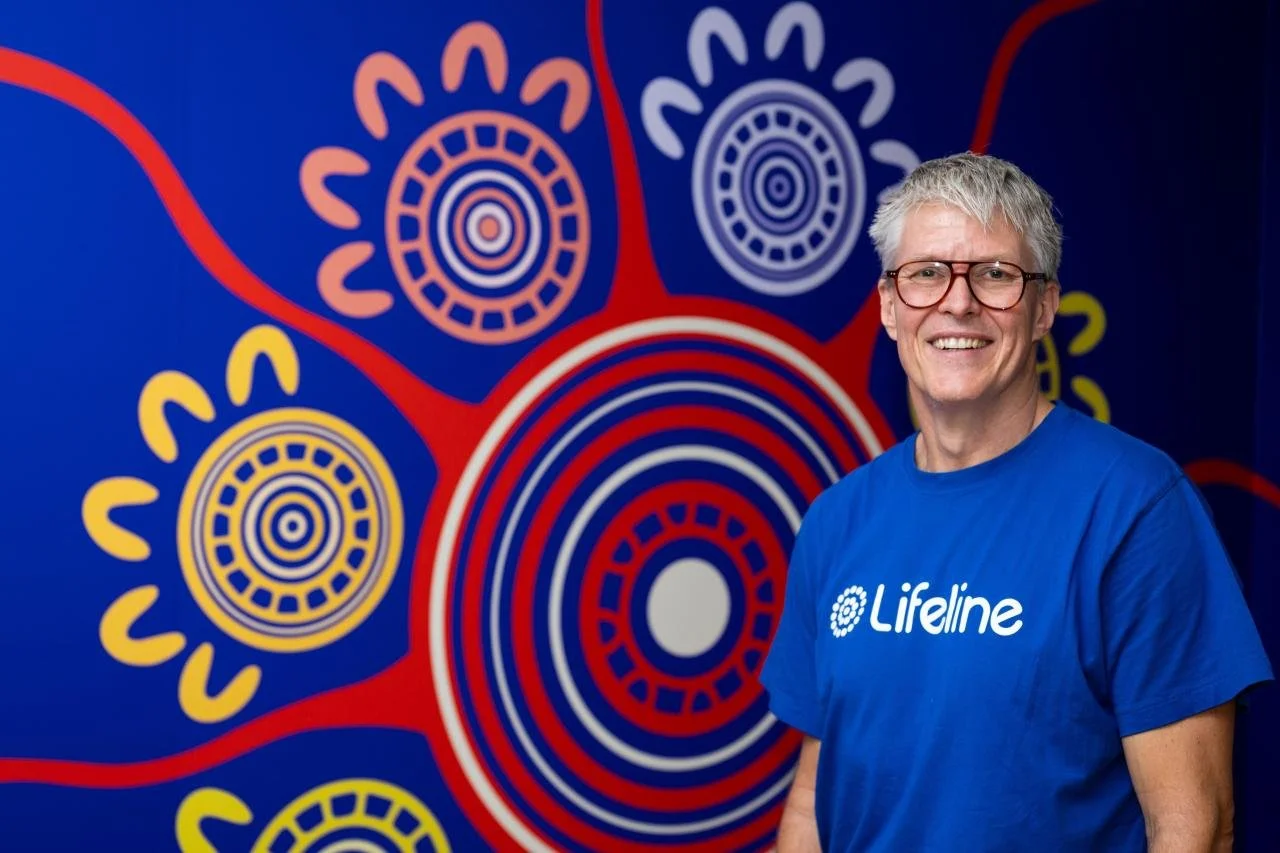
Commissioned through Balarinji, I created Pathways to Support for Lifeline Australia’s Reconciliation Action Plan. The artwork brings individual journey lines into a shared gathering place, expressing the role of Country, community and culture in seeking support and finding connection.
My contribution extended from the concept and finished artwork to its interpretation and application. Working with Balarinji and Lifeline, I prepared the work for use across the RAP and associated materials, presented its story to staff and stakeholders, and supported an expanded licence for a feature pledge wall in Lifeline’s Sydney office.
THE COMMISSION
The project began in January 2025, building on an existing relationship with Balarinji through an earlier commission for Charter Hall. The team put me forward for consideration by Lifeline, recognising the connection between my practice and my own experience of mental health services.
For me, the commission was personal. As a queer Palawa man, I brought an understanding of the vulnerability that can accompany seeking help and the strength found through cultural connection. The brief offered substantial creative freedom, allowing me to develop a work grounded in those experiences.
The national scope was an important consideration from the outset. I wanted the artwork to speak to First Nations people across Australia while maintaining the cultural integrity of my own practice.
COUNTRY & COMMUNITY
My practice is grounded in Country and informed by my community. Dot painting is not part of the Palawa practice I draw on, so I worked with journey lines and concentric forms that carry my own cultural and artistic language. The artwork’s relevance came through the experiences it expressed.
Journey lines travel across the composition and meet in a large circular motif representing gathering, seeking help and coming out of isolation. Within these forms, our Ancestors and Old People offer guidance. The surrounding circles hold the relationships and resources that support us, including Elders, cultural practice, language, spirituality and services.
The U-shaped forms speak to sitting together, yarning and sharing knowledge. These are ways of finding strength that have been important in my own life. I wanted the work to remind mob that, even when we feel vulnerable or alone, our connections to Country and community continue to hold us.
ARTWORK DEVELOPMENT
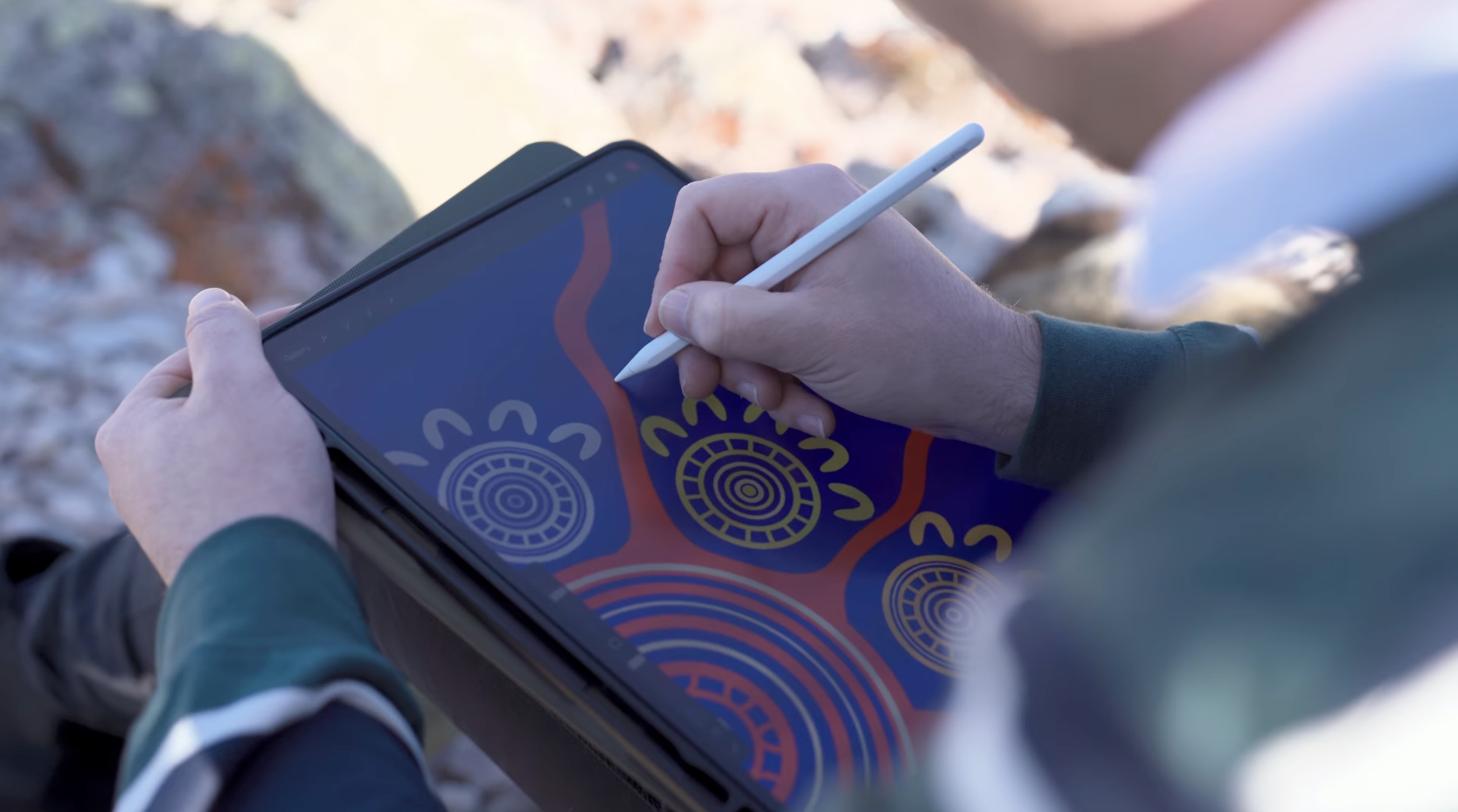
With a clear sense of purpose, I began creating early in the commission. The first concept became the final artwork, carrying the story and emotional response I wanted to communicate. I developed the composition on my iPad in Procreate, giving myself room to draw freely before preparing it for its proposed uses.
Lifeline’s recently updated brand palette informed the colours. I used the open space around the journey lines to convey feelings of isolation and vulnerability, while the gathering forms offered a sense of connection and support. The lines invite viewers to identify with a journey through the work.
I then took the artwork into Adobe Illustrator and prepared the composition and its elements in vector form. This allowed it to scale across applications and gave Balarinji access to details that could be incorporated throughout the RAP design.
COLLABORATION & APPLICATION
I worked closely with Justine Cooper and Manuela Strano at Balarinji, alongside Alex McGregor, Jodie Kertesz and Auntie Marjorie Anderson at Lifeline Australia. My responsibilities covered the artwork concept, finished files, artist statement and application guidance, as well as presentation and promotion.
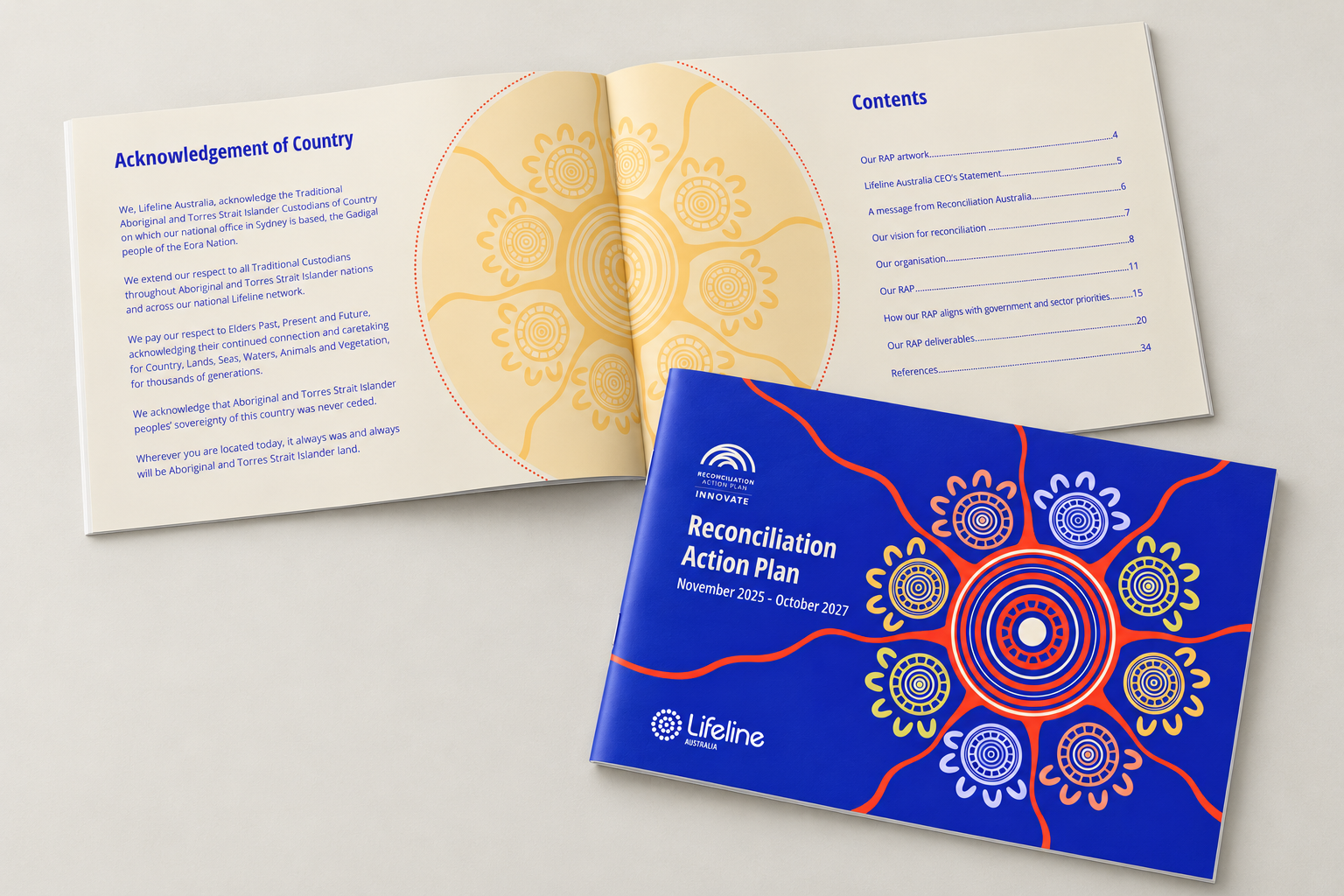
Balarinji designed the RAP using the artwork, while Lifeline managed its use within the organisation’s brand and broader materials. Maintaining the relationships between the motifs was important throughout this process: together, they carry the story of individual journeys, cultural kinship and recovery.
The response to the work led Lifeline to extend the original licence for a large feature wall in its Sydney office. The organisation activated it as a pledge wall, inviting staff, stakeholders and community to sign their commitment to reconciliation and Lifeline’s actions. This brought the artwork into the workplace as a shared point of engagement.
LAUNCH & OUTCOMES
I unveiled Pathways to Support in Sydney in March 2025, during an all-staff gathering that brought together Lifeline team members and stakeholders from across the country. Presenting the work in person allowed me to explain its meaning and discuss the importance of First Nations art within organisations and services.
In conversation with Auntie Marjorie Anderson, I spoke about cultural visibility and the need for support that recognises our cultural and spiritual lives. Art can open conversations about identity, belonging and shared history. I wanted staff to understand how the work could help people see that their knowledge and experiences were valued.
Blak Cockatoo Films also recorded an artist interview, extending the story beyond the launch. Feedback from Lifeline recognised both the artwork and the connection made through the presentation and discussion.
The work now appears in the Reconciliation Action Plan, associated print resources and the Sydney feature wall. For me, the commission demonstrated how an artwork can carry its cultural meaning across different settings, supporting conversations in a published document and in the daily life of a workplace.
PATHWAYS TO SUPPORT: THE ARTWORK AND THE ARTIST
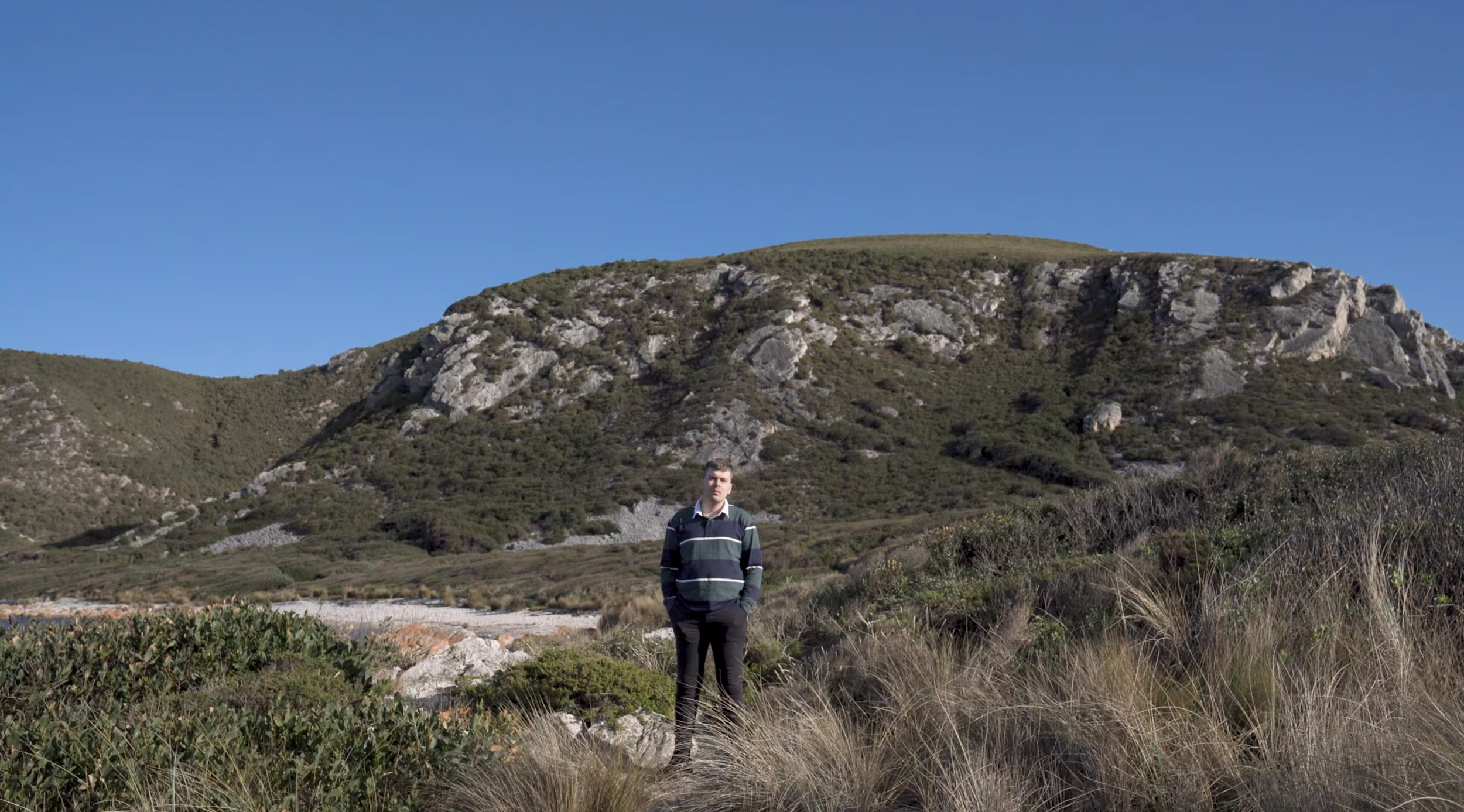
In this short film by Blak Cockatoo Films, I share the story behind Pathways to Support and the role of Country, community and culture in seeking support. The film explores my creative process and the importance of First Nations art within Lifeline’s work.
PROJECT CREDITS
Artist:
Caleb Nichols-Mansell
Client:
Lifeline Australia
Design Lead:
Balarinji
Project Team:
Justine Cooper, Balarinji
Manuela Strano, Balarinji
Alex McGregor, Lifeline Australia
Auntie Marjorie Anderson, Lifeline Australia
Jodie Kertesz, Lifeline Australia
Videography & Stills:
Blak Cockatoo Films